Enroll Now
AI MICROMIND TRAINING PROGRAM

No/Low-Code
Agentic AI & AI Automation

An implementation-first learning experience designed to help university students move from AI awareness to real-world system building. Build functional AI workflows, data agents, and operational MicroApps across 8 intensive sessions over 2 months.

125 Total Hours
8 Sessions 2 Months (Weekly)
93h Guided Practice
πŸ”₯ SPECIAL OFFER
1,500 EGP 8 Sessions across 2 Months
(Complete Program)
AI MicroMind Hands-on Technical Mentorship & Agent Building

Program Executive Summary

The AI MicroMind Training Program is an intensive, 2-month window (8 weekly live sessions) designed to bridge the gap between abstract AI theory and practical systems engineering.

Participants build explicitly on the MicroMind Platform, a cutting-edge environment allowing rapid prototyping of agentic workflows and custom application deployments.

βš™οΈ

MicroMind Core

A visual node-and-canvas environment powered by advanced concepts from LangChain and LangGraph in the background, allowing students to design complex agentic workflows and automated processes without writing code from scratch.

πŸ“±

MicroMind App

The final interaction and deployment layer where students learn to configure custom copilots, embedded website chatbots, webhook integrations, and real-time analytical report bots.

Program Snapshot

  • 🎯
    Program Name: AI MicroMind Training Program (Agentic AI & AI Automation Builders)
  • πŸ•’
    Total Duration: 125 Hours (32 Hours Live + 93 Hours Practical Application)
  • πŸ“…
    Delivery Rhythm:
    8 Live Sessions over 2 Months (1 Session Every Week β€” 4 Hours each)
    ⭐ 8 Weekly Sessions β€’ 2 Months
  • πŸŽ“
    Target Audience: University students, recent graduates, innovation clubs, and incubator participants
  • πŸ—οΈ
    Prerequisites: No coding background required. Curiosity, consistency, and a willingness to build are expected.
  • πŸ†
    Primary Outcome: Design, test, and present functional AI automation workflows, zero-hallucination data agents, or operational ReportBots & MicroApps.

What Makes the MicroMind Ecosystem Unique

Move beyond simple chat interfaces and step into operational systems engineering

01

Visual Workflow Automation

Build AI-powered processes visually on a canvas, connecting steps across prompts, conditional logic, external tools, and multi-channel outputs. Move past the limitations of standalone chatbots.

02

Zero-Hallucination Data Agents

Featuring a native, proprietary verification layer. Students learn how to build chat-to-data agents that guarantee 100% accuracy and complete traceability when querying structured enterprise databases, eliminating model hallucinations entirely.

03

Next-Generation ReportBots

Completely replace traditional BI software. Query systems using natural language and receive immediate answers in three distinct, configurable formats: direct answers, structured tables, or visual analytical charts matching the requested chart type.

Detailed 8-Day Curriculum Roadmap

A comprehensive breakdown of your 2-month learning journey (8 weekly intensive sessions)

Day 1 Foundations to First Workflow: AI & LLMs, LangChain, LangGraph & MicroMind Core β–Ό
πŸ“š Core Concepts
  • AI Family Tree: Clarifying Artificial Intelligence, Machine Learning, and Deep Learning.
  • Transformers Architecture: How modern transformers function and why they shifted the paradigm toward Generative AI.
  • Self-Attention vs. Multi-Head Attention: What is the difference between Self-Attention and Multi-Head Attention, and how attention heads specialize.
  • What is GPT: Understanding the Generative Pre-trained Transformer architecture, auto-regressive prediction, and what GPT truly means.
  • LLM vs. SLM: What raw Large Language Models and Small Language Models are, and how compute constraints dictate model selection.
  • The Spectrum: Practical differences between a Chat Assistant, an Autonomous Agent, and Agentic AI.
  • Orchestration Frameworks: Why raw foundation models require orchestration to become reliable corporate systems.
  • LangChain & LangGraph: Chains, memory, tool integrations, cyclic graphs, state management, and multi-agent coordination.
  • Canvas Nodes & Execution Boundaries: Mastering node categories on the MicroMind Core canvas and mapping Run Once vs. Schedule execution modes.
πŸ› οΈ Practical Workshop

Visualizing and constructing a primary multi-step text generation and processing workflow inside the MicroMind Core canvas.

🎯 Homework / Milestone

Create a comprehensive one-page AI system concept map and build a functioning workflow reflecting a specific student or business process use case.

Day 2 Prompt Engineering & Persona Design β–Ό
πŸ“š Core Concepts
  • Prompts as Source Code: Why prompts act as the functional source code of every non-code AI agent.
  • Structured Prompt Engineering: The single most impactful skill for an enterprise AI system builder.
  • Comprehensive Prompting Techniques: Deep dive into all prompt techniques: Zero-shot, few-shot, role prompting, chain-of-thought, and production-grade pattern design.
  • Deep Dive into Retriever Nodes: Detailed explanation and configuration of all vector retrieval and retriever nodes on the MicroMind canvas.
  • Role vs. Persona Design: The operational differenceβ€”and why detailed personas generate consistent, non-deviant business outputs.
  • Evaluation Loops: Designing iterative loops to continuously audit, refine, and improve prompt performance.
  • Node Prompts: Structuring prompts for visual workflow orchestration nodes rather than generic chat windows.
πŸ› οΈ Practical Workshop

Rewriting brittle, open-ended user queries into robust, structured prompt packages engineered for multi-path routing.

🎯 Homework / Milestone

Submit a targeted prompt package containing at least three high-reliability variants for automated customer classification and support workflows.

Day 3 Retrieval-Augmented Generation (RAG) β–Ό
πŸ“š Core Concepts
  • What is RAG: Core fundamentals of Retrieval-Augmented Generation and why foundation models must be grounded in proprietary knowledge.
  • What is RAG Pipeline: End-to-end data flow: Document parsing, text chunking, embedding generation, vector search, and context injection.
  • What is RAG Architectures: Architectural patterns across Naive RAG, Advanced RAG, and Modular Multi-Query RAG systems.
  • Key Benefits of RAG: Overcoming hallucinations, cutting fine-tuning expenses, and providing verifiable citations with trusted source references.
  • RAG Machines Architecture Phases: The clear distinction between the Ingestion Phase (offline indexing) and the Retrieval + Generation Phase (runtime query execution).
  • Precision Parameters: Configuring chunk size, chunk overlaps, Top-K retrieval thresholds, and similarity distance metrics.
πŸ› οΈ Practical Workshop

Ingesting corporate document packages, setting up vector retrieval nodes, and comparing grounded outputs against baseline models.

🎯 Homework / Milestone

Build and deploy a functional knowledge assistant mapped to a chosen operational domain (e.g., University Admissions FAQs, Student Services guidelines, or company policies).

Day 4 Tool Calling & Agent Design β–Ό
πŸ“š Core Concepts
  • Four Categories of Tools in Our Canvas: In-depth breakdown of MicroMind canvas tools across standard, token-based, custom, and advanced action categories.
  • What is Webhook & Triggered Agent: Event-driven architecture, webhook listeners, real-time payload intake, and configuring instant triggered agents.
  • Core Agent Loop (ReAct): Deconstructing the core agent reasoning loop: The Think → Act → Observe → Repeat pattern.
  • Agents vs. Chains: How autonomous reasoning agents differ fundamentally from fixed linear pipelines.
  • Observability & Tracing: Production-grade debugging and execution tracing for real-time visibility into multi-agent decision steps.
πŸ› οΈ Practical Workshop

Developing an autonomous tool-using agent that dynamically selects external web services based on changing user contexts.

🎯 Homework / Milestone

Document an agent-driven process flowchart outlining precise tool boundaries, conditional failover paths, and a tracing validation checklist.

Day 5 SQL Agents & Data Integrations β–Ό
πŸ“š Core Concepts
  • Database Structures: Relational query structure and dialect nuances across major corporate systems: PostgreSQL, MySQL, SQL Server, SAP HANA, Oracle, and Odoo.
  • Schema Hallucinations: Why generic AI agents hallucinate on database schemas: Unpacking the three terminal failure modes.
  • Schema-Aware Prompting: The single most critical technique for building highly reliable relational database query agents.
  • Zero-Hallucination Design: MicroMind's Five Zero-Hallucination Design Patterns: Runtime schema injection, strict data safety boundaries, automated SQL validation loops, programmatic error handling instructions, and validation chains.
  • Secure Connections: Structuring, managing, and authenticating secure database connection strings across 8 supported platforms.
πŸ› οΈ Practical Workshop

Engineering a secure, verification-first data agent that takes natural language data requests and extracts accurate relational queries with zero hallucinations.

🎯 Homework / Milestone

Author a comprehensive blueprint for a departmental database assistant, detailing the schema guardrails, validation rules, and connection parameters.

Day 6 Social Media Use Cases & External Channel Routing β–Ό
πŸ“š Core Concepts
  • Micro-Architectures: Extending internal platform workflows to public-facing environments via MicroMind App micro-architectures.
  • Webhook Intake: Designing webhook intake channels to receive real-time, event-driven communications from external platforms.
  • Intelligent Routing: Constructing automated multi-path message routers that evaluate customer intent, extract fields, and prioritize response urgency.
  • Campaign Automation: Social media campaign automation: Structuring auto-response nodes, managing contact tags, and tracking campaign interactions safely.
  • Governance Rules: Setting hard rate-limits, input filtering, and configuring seamless human-in-the-loop escalation rules.
πŸ› οΈ Practical Workshop

Connecting an active webhook node to an automated text processing canvas to reply and route incoming customer interactions.

🎯 Homework / Milestone

Expand your core capstone architecture to incorporate at least one user-facing external communication channel or webhook pipeline.

Day 7 ERP Report Bots, Microapps & Capstone Studio β–Ό
πŸ“š Core Concepts
  • Microapp Deployment: Deploying complex visual workflows into functional business microapps accessible to organizational users.
  • Report Bot Configuration: Configuring multi-view Report Bots: Mastering direct answering text, structured tabular formatting, and formal executive report formatting.
  • Replacing BI: Teaching an agent to convert a user question into a dynamic visual chart matching a requested chart layout.
  • Report Explorer: Utilizing the platform's Report Explorer View to log, cache, audit, and save routine operational reports.
  • Architecture Review: Capstone Architecture Review: Running technical evaluations on prompt security, data boundaries, and tool calling stability.
πŸ› οΈ Practical Workshop

Building an operational ERP Report Bot that takes raw business metrics and builds custom tables, reports, and visual chart cards instantly.

🎯 Homework / Milestone

Finalize your end-to-end capstone system configuration, script the presentation flow, and prepare the solution architecture validation notes.

Day 8 Final Project Demo Day & Career Portfolio Review β–Ό
πŸ“š Core Concepts
  • Pitch Standards: Presentation and pitch standards for technical supervisors, business stakeholders, and enterprise partners.
  • Architectural Articulation: Articulating agent architectures, node logic, data grounding paths, and clear business outcomes.
  • System Governance: Addressing system limitations, data governance considerations, and mapping out subsequent operational phases.
  • Career Workshop: Translating no/low-code AI building experiences into clear portfolio items, resume lines, and talking points for corporate interviews.
πŸ› οΈ Practical Workshop

Live capstone project executions, end-to-end user experience demonstrations, and evaluation panel reviews.

🎯 Homework / Milestone

Submit your final production documentation package, including workflow canvas files, prompt manifests, and user guides for certification clearance.

Practical Capstone Project Tracks

Choose your track and build a functional agent for real-world enterprise needs

Track 1

Grounded Admissions / Student Support FAQ Bot

Build a specialized Retrieval-Augmented Generation (RAG) system grounded in official academic handbooks, university admissions guidelines, and calendars. Features human-in-the-loop escalation routing rules for complex inquiries.

Track 2

Enterprise Relational Data Q&A Assistant

Develop a verification-oriented database agent utilizing schema guardrails to query corporate relational databases safely. Delivers 100% accurate, hallucination-free SQL-based analytical results.

Track 3

Multi-View ERP Department Report Bot

Create an analytics microapp allowing business users to query key performance indicators using natural language. Generates direct text explanations, structured data tables, or visual analytical charts on the fly.

Track 4

Social Media Lead Intake & Routing System

Design a real-time event-driven automation pipeline. Receives public incoming messages via webhooks, evaluates customer lead intent using multi-path routers, and syncs fields across third-party CRM tools.

Assessment & Certification Framework

Certificates of completion are issued strictly to students who satisfy attendance guidelines and maintain passing scores across our structured evaluation metrics:

Capstone System Build Quality 40%
Weekly Labs & Homework Submissions 20%
Mini-Assignments & Short Reflections 15%
Final Demo Day Presentation 15%
Attendance & Lab Participation 10%

Strategic Value for Partners

  • Practical Career Readiness

    Students graduate with functional, verified project portfolios rather than abstract or passive theoretical exposure alone.

  • Broad Cross-Faculty Inclusion

    No coding requirements mean students from Business, Engineering, Information Systems, and Media can build advanced AI workflows side by side.

  • Direct Operational Value

    Capstone projects can be customized to resolve real institutional challenges, including student services support or administrative automation.

What You Will Graduate With

Move beyond certificates of attendance. Leave with an enterprise portfolio that speaks for itself in hiring interviews.

🌐

Deployed AI Portfolio (4 Live Systems)

Four functional, production-ready AI agents and workflows hosted live with custom domain endpoints to showcase directly to employers.

Live URLs & Demo Accounts
πŸ“œ

Official MicroMind Academic Certificate

Accredited completion certificate with a verifiable digital credential ID, LinkedIn verification badge, and graduation transcript.

Verifiable Digital Credential
πŸ“

System Architecture & Blueprints Repository

Complete project documentation, schema-aware prompt packages, RAG retrieval configs, and database connection architectures in your GitHub profile.

GitHub Source & Blueprints
🀝

Lifetime Alumni Community & Career Referrals

Join our exclusive Discord developer hub, receive priority recommendations to hiring partner companies across EMEA, and attend exclusive hackathons.

Partner Hiring Priority

Flexible Schedule & Attendance Modes

Designed specifically to fit your university and work schedule without pressure

⏱️

8 Sessions Across 2 Months

Exactly 1 intensive session every week (4 hours each on weekends). Gives you 6 full days between sessions to practice, build, and receive mentor feedback.

  • βœ“ Weekend sessions (Friday / Saturday)
  • βœ“ 32 live hours + 93 practical hours
  • βœ“ Exam-friendly schedule coordination
πŸ“

In-Person Hubs & Interactive Streaming

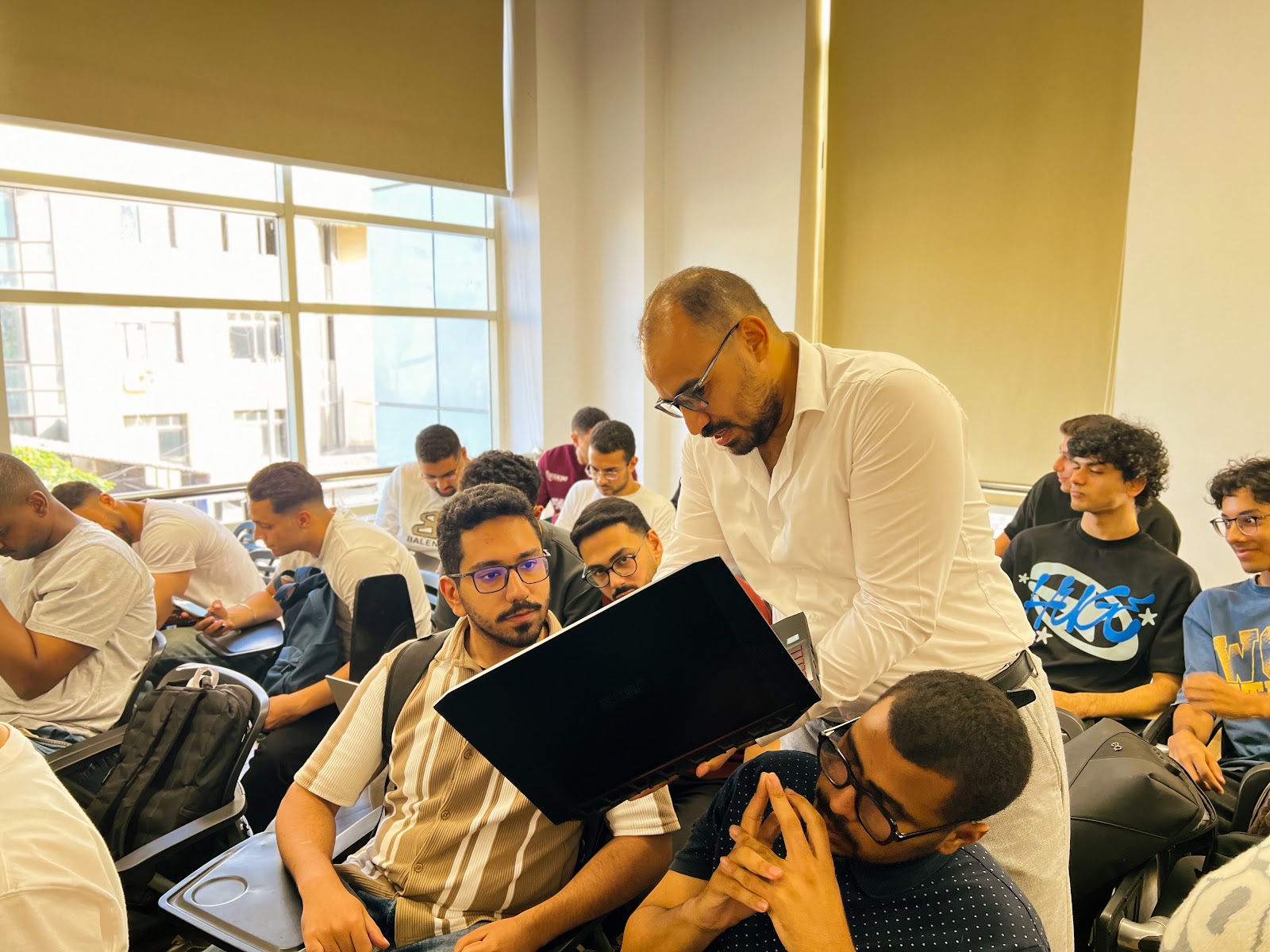
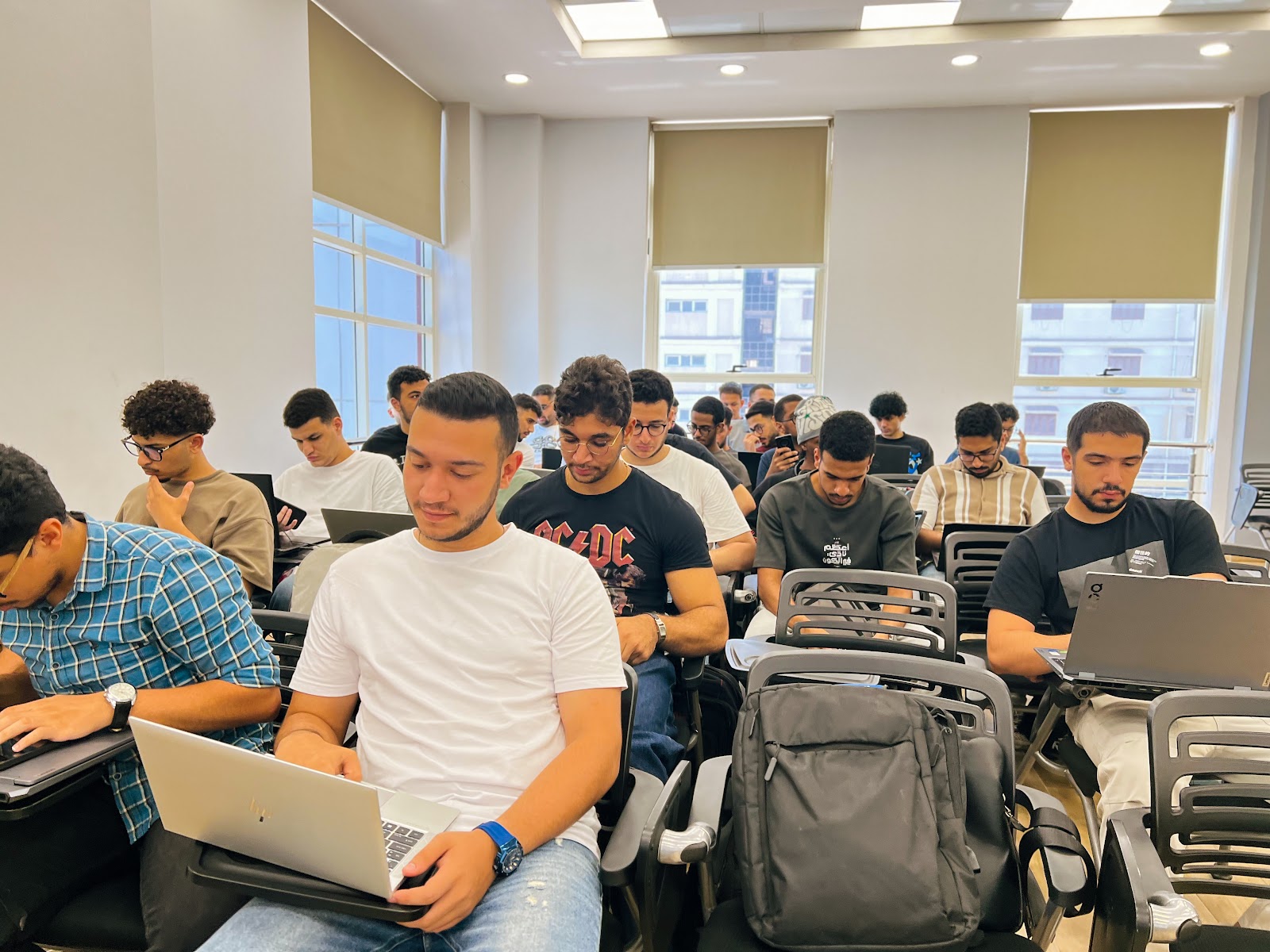
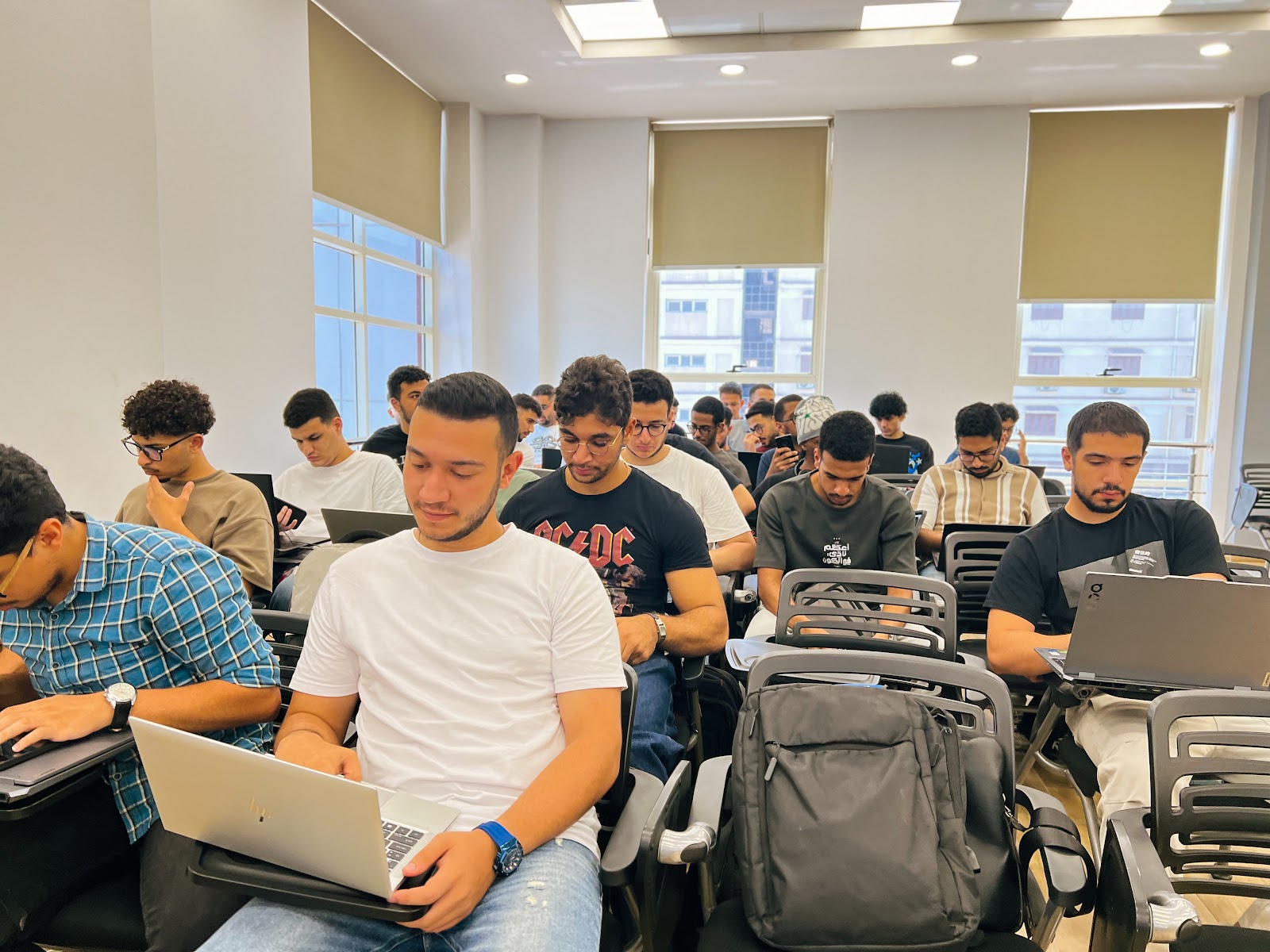
Join in-person at our partner university and innovation hubs (Cairo, Mansoura, etc.) or attend via our live interactive remote stream from any governorate.

  • βœ“ In-person campus computer labs
  • βœ“ Live online streaming with Q&A
  • βœ“ 1-on-1 breakout mentoring rooms
πŸŽ₯

24/7 HD Recording & Resource Vault

Never fall behind if you have university commitments or travel. All sessions, canvas templates, prompt files, and code repositories are available permanently.

  • βœ“ Full 1080p recording library
  • βœ“ Canvas workflow templates (.json)
  • βœ“ Dedicated student LMS portal

Everything You Need to Know

Clear answers to help you make the right decision for your AI career journey

Q1 Do I need a programming or computer science background to succeed? β–Ό

No prior programming knowledge is required. The program is built entirely around No-Code / Low-Code agentic systems and visual workflow canvas engineering. If you understand basic logic and have a genuine desire to learn and build, our step-by-step mentor guidance will take you from zero to deployed production systems.

Q2 What is the training delivery rhythm and how does it fit with my university? β–Ό

The training consists of 8 live sessions over 2 months β€” exactly one 4-hour session per week on weekends (Friday or Saturday). This gives you the entire week to practice, review recordings, and complete milestones without any conflict with university classes or midterms.

Q3 What happens if I miss a live session due to an emergency or exam? β–Ό

Every live session is recorded in high definition and published to your student LMS portal within 24 hours. You can watch the recording, access the exact workflow canvas templates, and ask questions directly to your mentor on Discord.

Q4 What does the 1,500 EGP special offer price cover? β–Ό

The 1,500 EGP is a one-time all-inclusive fee for the entire 2-month program. It covers all 8 live sessions (32 hours), 93 guided practice hours, cloud accounts on the MicroMind platform, 1-on-1 project reviews, capstone guidance, and the accredited AI MicroMind certificate of completion.

Q5 How do I pay and how is my seat confirmed? β–Ό

You can transfer the 1,500 EGP fee easily via InstaPay or direct bank transfer to our official CIB account (100039231632). After transferring, visit our unified registration portal, enter your details, and upload your receipt screenshot. Your seat is confirmed immediately upon verification.

Official Training Application & Payment Portal

Submit your application, select your preferred city, choose your cohort preference, and upload your payment transfer receipt directly in one single unified interface.

Proceed to Application & Payment Portal πŸš€